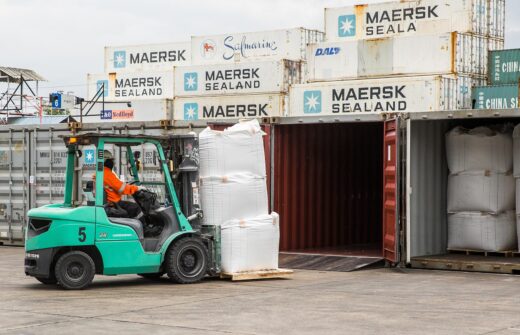
With the rise of Industry 4.0, over 60% of businesses in Vietnam are now applying advanced technologies in logistics, enabling significant savings in both cost and time. The integration of AI and Blockchain is expected to further expand this transformation.
Vietnam’s logistics market is valued at approximately USD 80 billion, accounting for nearly 5% of national GDP. However, logistics costs remain higher than the regional and global average. This reality is pushing manufacturers and retailers to streamline supply chains and invest in modern operating infrastructure.
Digital Transformation Accelerates to Meet E-commerce Growth
The digitalization of logistics is rapidly gaining momentum to keep up with the booming e-commerce and import-export activities. Key trends include:
- Smart supply chain integration
- Real-time operations management systems
- Flexible warehouse models
According to Vietnam’s Department of E-commerce and Digital Economy (Ministry of Industry and Trade), by the end of 2024, 61% of Vietnamese businesses had adopted digital technologies in logistics. These technologies help reduce logistics costs by 23% on average and shorten order processing times by 35%, thanks to automation.
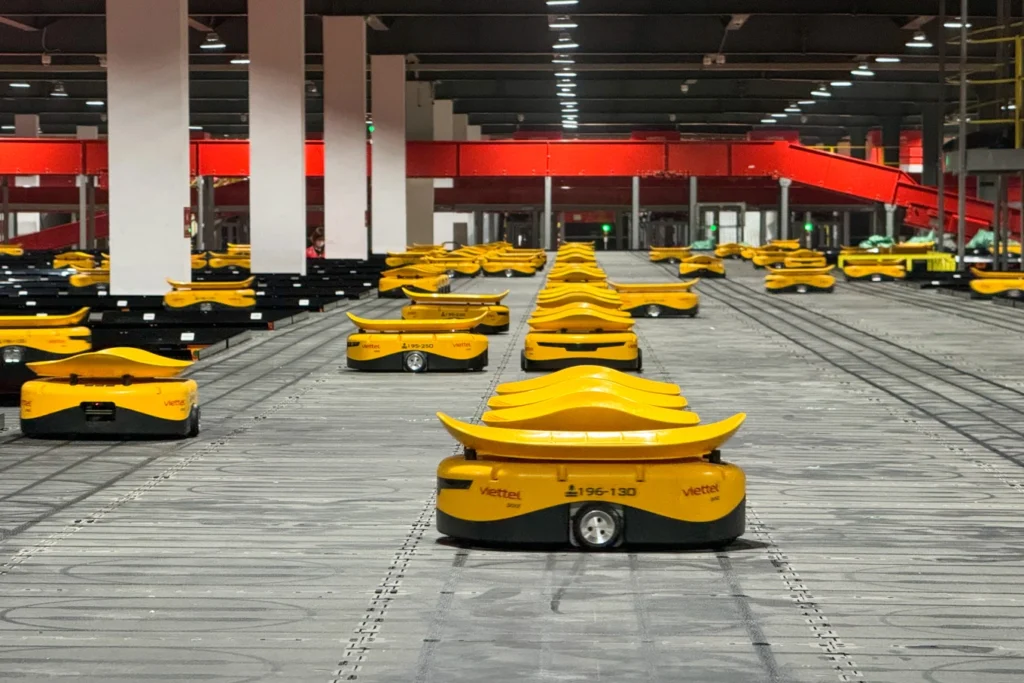
Viettel Post automated logistics center – Photo by Lưu Quý
Despite these improvements, experts say there’s still ample room for development. Businesses are urged to implement advanced technologies like AI, IoT, and Blockchain to enhance forecasting, optimize transportation routes, and increase transparency across the supply chain.
Warehouse Automation Gains Traction
A major transformation is occurring in warehouse operations through automation and intelligent management systems.
Giao Hàng Tiết Kiệm (GHTK), which operates over 600,000 m² of warehouse space, has incorporated cutting-edge technologies such as AI, IoT, and Big Data into its logistics system. Their IoT ecosystem connects millions of endpoints including scanners, conveyors, sensors, cameras, wearables, and data processors. This enables smart, real-time coordination of automated sorting systems.
AI and Machine Learning are used to predict delivery demand by location, suggest delivery schedules, optimize routes, and analyze customer feedback.
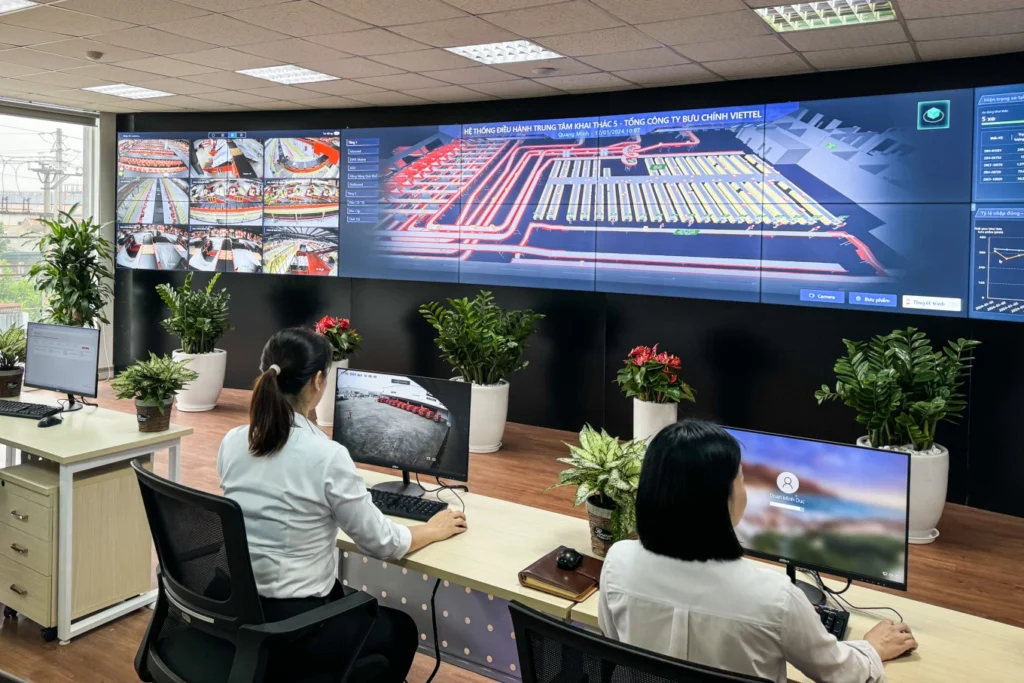
Viettel Post warehouse tech integration – Photo by Lưu Quý
BEST Express has also invested heavily in logistics technology. According to Mr. Gavin Lu, CEO of BEST Vietnam, the company operates with two core systems: DWS (Dimensioning Weighing Scanning) and WCS (Warehouse Control System), both integrated with AI modules to automate and optimize goods flow. Their facility can handle over 1 million orders daily, reducing the total delivery time from order placement to customer receipt to under 48 hours.
Micro-Fulfillment and Smart Warehousing on the Rise
One of the key logistics trends in 2025 is the growth of micro-fulfillment centers—small warehouses located near residential areas to speed up last-mile delivery. For large retailers with extensive SKUs, separating online and offline inventory improves efficiency. Major logistics providers are racing to expand their urban warehouse networks.
According to Viet Research, a business strategy and market research firm, Vietnam’s logistics industry is entering a new phase of deep digital transformation. The percentage of businesses successfully undergoing digital transformation is expected to rise (currently only ~27% are effective). Emerging technologies like AI, Machine Learning, Blockchain, and Big Data are predicted to see widespread adoption:
- AI: supports inventory optimization, demand forecasting, and route efficiency.
- Blockchain: enhances transparency and traceability in supply chains.
- IoT & Big Data: enable real-time data ecosystems for logistics.
“Integrated digital platforms will form a comprehensive logistics ecosystem, linking warehousing, transportation, and delivery. This end-to-end visibility allows businesses to make faster, smarter decisions,” the report notes.
Sustainability: Green Logistics Is the Future
Beyond digital transformation, Vietnamese logistics companies are also focusing on reducing carbon emissions. Exporters now face mandatory carbon disclosure requirements, pressuring businesses to revamp operations and infrastructure.
DHL, for example, is replacing traditional vehicles with electric trucks both in Vietnam and globally. The goal is to fully transition within 3–5 years, according to a DHL representative.
Local giants such as Viettel Post, Saigon Newport, and Transimex have also started adopting ESG strategies, including:
- Switching to waterway transport
- Investing in energy-efficient equipment
However, many SMEs (small and medium-sized enterprises), which make up the majority of Vietnam’s logistics sector, remain hesitant to join the green transformation. According to Phạm Tấn Công, President of the Vietnam Chamber of Commerce and Industry (VCCI), ESG standards, Net Zero goals, and carbon border taxes are becoming non-negotiable compliance barriers.
“Green logistics is no longer optional—it is a strategic imperative for Vietnamese businesses in the global push for sustainable development,” he emphasized.
Expert Recommendation for Green Logistics Development:
- Shift to electric, hydrogen, or LNG-powered vehicles
- Prioritize rail and water transport for high-capacity logistics
- Optimize transportation scale and reduce empty runs
- Invest in smart warehouses and ports for efficiency
Source: vnExpress