


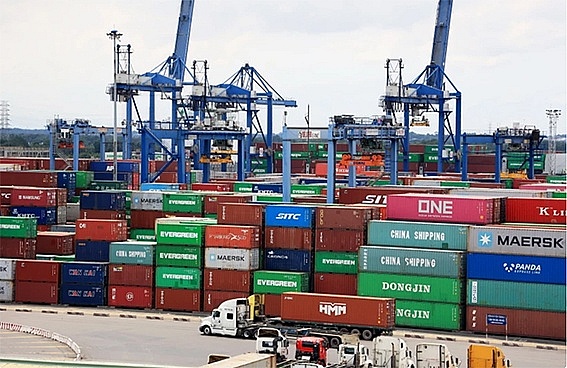
According to data for the first seven months of 2025, Vietnam–Singapore trade reached more than SGD 23 billion, up 26.1% year on year. Vietnamese goods recorded a surplus of over SGD 2 billion in Singapore, underscoring Vietnam’s momentum in the regional market.
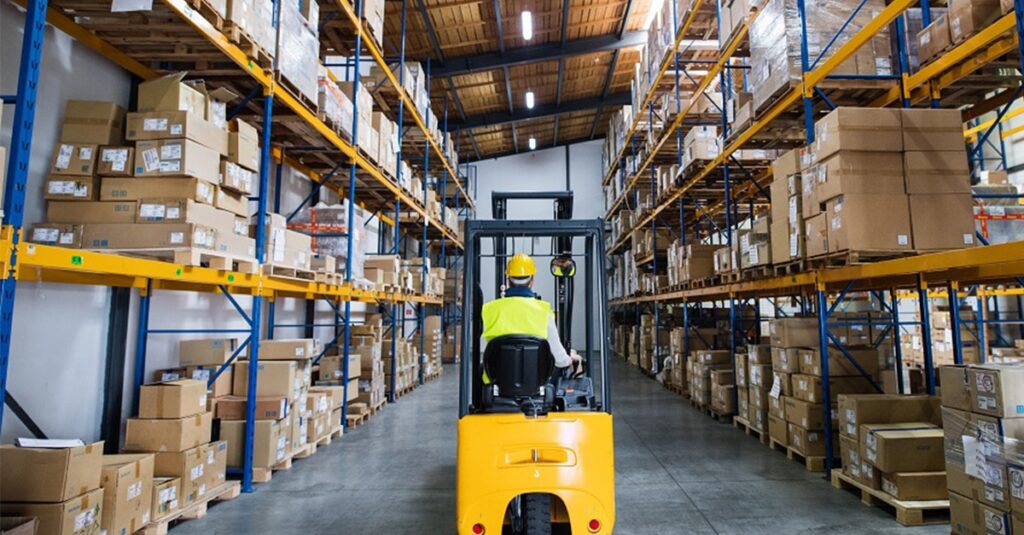
Singapore serves as a major transshipment hub for machinery and electrical equipment bound for Vietnam.
These impressive seven-month figures not only show strong growth but also open the door to deeper cooperation, as 2025 has brought positive signals in Vietnam–Singapore trade. Both sides continue to affirm each other’s status as important strategic partners amid a volatile global economy.
Vietnam — a Bright Spot in Singapore’s Trade Picture
Among Singapore’s 15 main trading partners, Vietnam has firmly maintained 10th place—clear evidence of Vietnam’s growing importance to the Lion City.
According to Singapore’s corporate regulator, total bilateral trade between the two countries reached SGD 23.1 billion in the first seven months of 2025, an impressive 26.1% increase from the same period in 2024. This is a notable pace of growth, reflecting the vitality and significant potential of bilateral trade.
Notably, Singapore’s exports to Vietnam reached SGD 16.3 billion, up 20.2%, while its imports from Vietnam jumped 43% to SGD 6.7 billion. In July 2025 alone, Vietnam’s exports to Singapore surged 58.1% year on year, contributing to monthly bilateral trade of SGD 3.6 billion, up 14.6%. This points to a sharp rise in the presence of Vietnamese goods in the Singaporean market.
Cao Xuan Thang, Vietnam’s Trade Counsellor in Singapore, emphasized that counting only goods of Singaporean and Vietnamese origin, Vietnam ran a trade surplus of SGD 2.12 billion with Singapore in the first seven months of 2025. This figure reflects the competitiveness and appeal of Vietnamese products in a high-end market like Singapore.
The trade structure between Vietnam and Singapore continues to show the complementarities of the two economies, especially in technology-related goods and fuels. In Singapore’s exports to Vietnam, the two key groups are electrical machinery and equipment and parts (HS 85) and mineral fuels, petroleum, and distillation products (HS 27).
Together these two groups totalled SGD 9.5 billion, accounting for 68.3% of Singapore’s exports to Vietnam in the first seven months of 2025. Electrical machinery, equipment and parts reached SGD 8.5 billion, up 23.9%, while fuels and petroleum products came to SGD 2.7 billion, up 28.1%.
Interestingly, the nature of these two groups differs markedly. Electrical machinery and equipment are mostly re-exports—up to 97.2%—highlighting Singapore’s role as a transshipment hub. By contrast, fuels and petroleum products are largely produced in Singapore, making up 99% of export value to Vietnam.
Other groups also posted noteworthy growth, such as nuclear reactors, boilers, machinery and mechanical appliances and parts (HS 84) at SGD 1.2 billion, up 48.8%.
On the other side, HS 85 (electrical machinery and equipment and parts) was also the largest import category for Singapore from Vietnam, at SGD 3.4 billion—up 88.5% year on year and accounting for 50.5% of total import value.
Next were HS 84 (nuclear reactors, boilers, machinery and mechanical appliances and parts) at SGD 1.5 billion, up 85.6%, and HS 70 (glass and glassware) at SGD 494.3 million, up 11.8%.
Several other Vietnamese export groups posted striking positive growth as well, including HS 71 (natural or cultured pearls; precious stones), up 171.4%, and HS 90 (optical instruments and apparatus), up 33.6%.
Prospects for Cooperation amid the Regional Economic Backdrop
Vietnam–Singapore trade is expanding robustly as Singapore’s macroeconomic indicators also turn more positive. According to Mr. Thang, the Ministry of Trade and Industry (MTI) has revised its 2025 GDP growth forecast up from 0.0%–2.0% to 1.5%–2.5%, thanks to solid growth in the first half of the year.
Singapore’s GDP grew 4.4% in Q2 2025 and 4.1% in Q1 2025 year on year. Key drivers included wholesale trade, manufacturing, finance-insurance, and transportation-storage.
However, MTI also cautioned that growth in some sectors may moderate in the final quarters of 2025, and while Singapore’s outlook has improved, downside risks remain in the second half. This calls for continued efforts by both Vietnam and Singapore to sustain growth and seize new opportunities.
Mr. Thang added that a focus on technology-related products and fuels provides a solid foundation for the business communities of both countries to capture new cooperation opportunities in regional investment trends—such as linking production-supply chains, developing new trade platforms, and advancing logistics.
To realize this potential, Vietnam’s Trade Office in Singapore is committed to continuing to update on conditions, mechanisms, and policies; supporting Vietnamese firms in business matchmaking, product showcases, and brand promotion to increase the presence of Vietnamese goods in Singapore. It will also assist Singaporean delegations coming to Vietnam to source goods and promote industrial investment, trade, and services.
These efforts are expected to elevate Vietnam–Singapore trade to new heights in the final months of 2025 and beyond.
Source: Hai Quan Online