


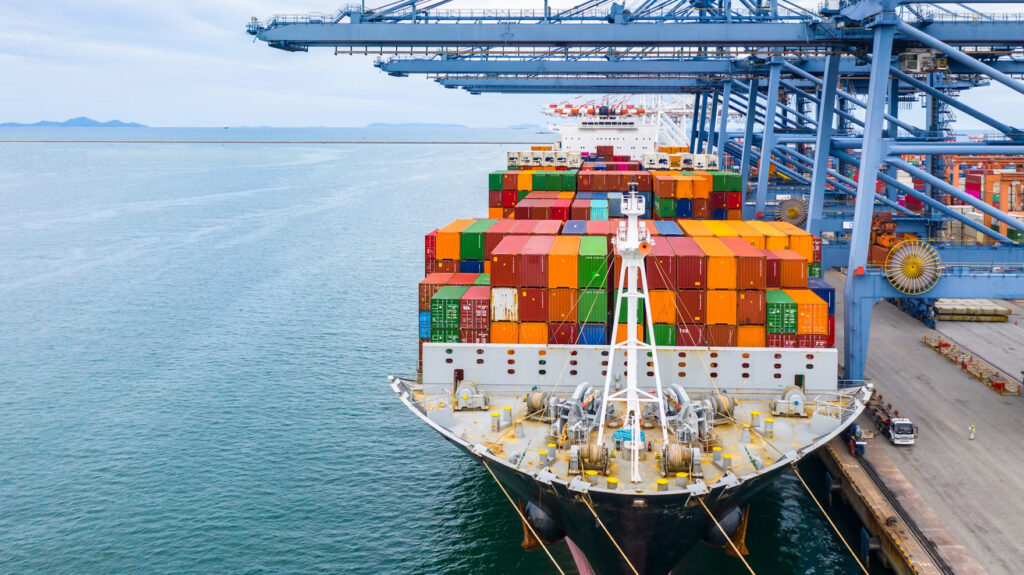
U.S. container imports surged 18.2% MoM to 2.62M TEUs in July 2025. West Coast led share; China volumes jumped 44.4%. See key stats and takeaways.
Snapshot: July 2025 at a Glance
| Metric | Value |
|---|---|
| Total U.S. imports | 2,621,910 TEUs |
| Month-over-month change | +18.2% vs. June |
| Year-over-year change | +2.6% vs. July 2024 |
| Gap to all-time record | 555 TEUs below May 2022 peak |
| Versus July 2019 (pre-COVID) | +19.3% |
| Year-to-date through July | +3.6% vs. same period 2024 |
Source: Descartes Systems Group, August Global Shipping Report; coverage via Food Logistics.
West Coast Keeps the Lead—With Only Modest Delays
For the second straight month, West Coast ports held a market-share edge over East and Gulf Coast gateways. Despite the surge, port transit delays rose only modestly, signaling that U.S. port infrastructure handled elevated volumes effectively.
China & Asia Rebound Drives Volumes
- China imports: 923,075 TEUs, +44.4% MoM—the highest since January 2025 and just 9.8% below the July 2024 record (1,022,913 TEUs).
- China share of U.S. imports: 35.2%, the highest since early 2025 (still below the 41.5% peak in Feb 2022).
- Hong Kong: +25,185 TEUs (+47.8% MoM).
These increases point to a resurgence of Asia-origin shipments and likely front-loading ahead of policy changes.
Policy Watch: Why Volumes Jumped
July’s spike reflects more than peak-season cycles. Importers appear to be reacting to tariff and trade policy timelines, including:
- Aug 1, 2025: Reciprocal duties on 60+ countries take effect.
- Aug 7, 2025: India-specific tariffs begin; universal copper tariff launches.
- Oct 15, 2025: Scheduled expiration of the U.S.–China tariff truce.
“July’s surge underscores the impact of U.S. tariff policies—not just seasonal demand—on container volumes,” said Jackson Wood, Director of Industry Strategy at Descartes.
What Shippers & Importers Should Do Now
- Model tariff exposure by HS code and country of origin; scenario-plan landed costs through Q4.
- Time-sensitive bookings: Consider front-loading and securing vessel space/containers earlier than usual.
- Diversify ports and routings to hedge against policy or congestion shocks.
- Tighten lead times and safety stock for SKUs hit by new duties (e.g., India categories; copper-intensive goods).
- Review contracts (ocean, drayage, rail) for flexibility clauses as volatility persists.
Source: Food Logistics
